Repairing a Damaged Driveway Section in the Village of St. George
Before, during, and after photos document removal of a damaged area and replacement concrete at a residential driveway.
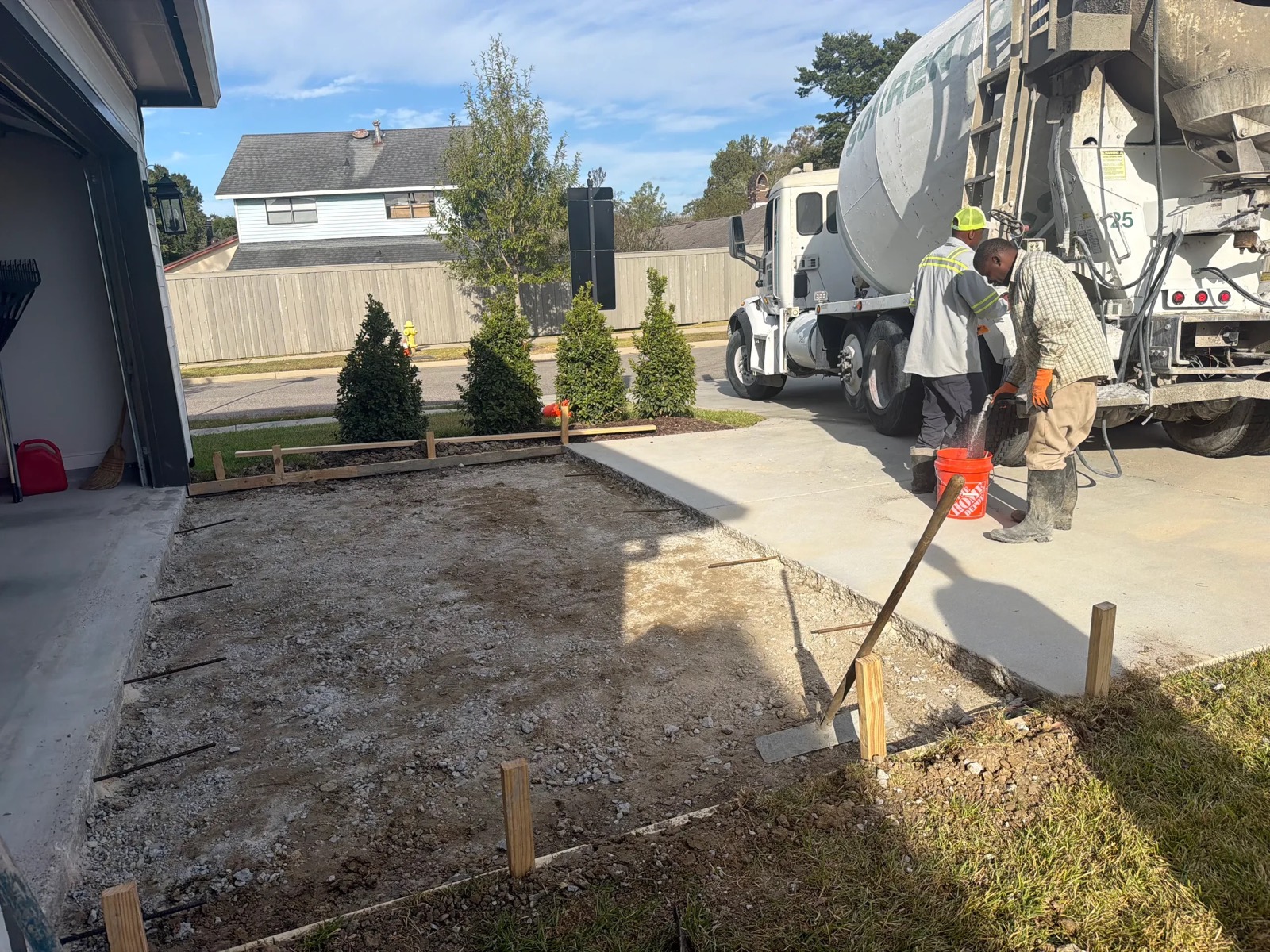
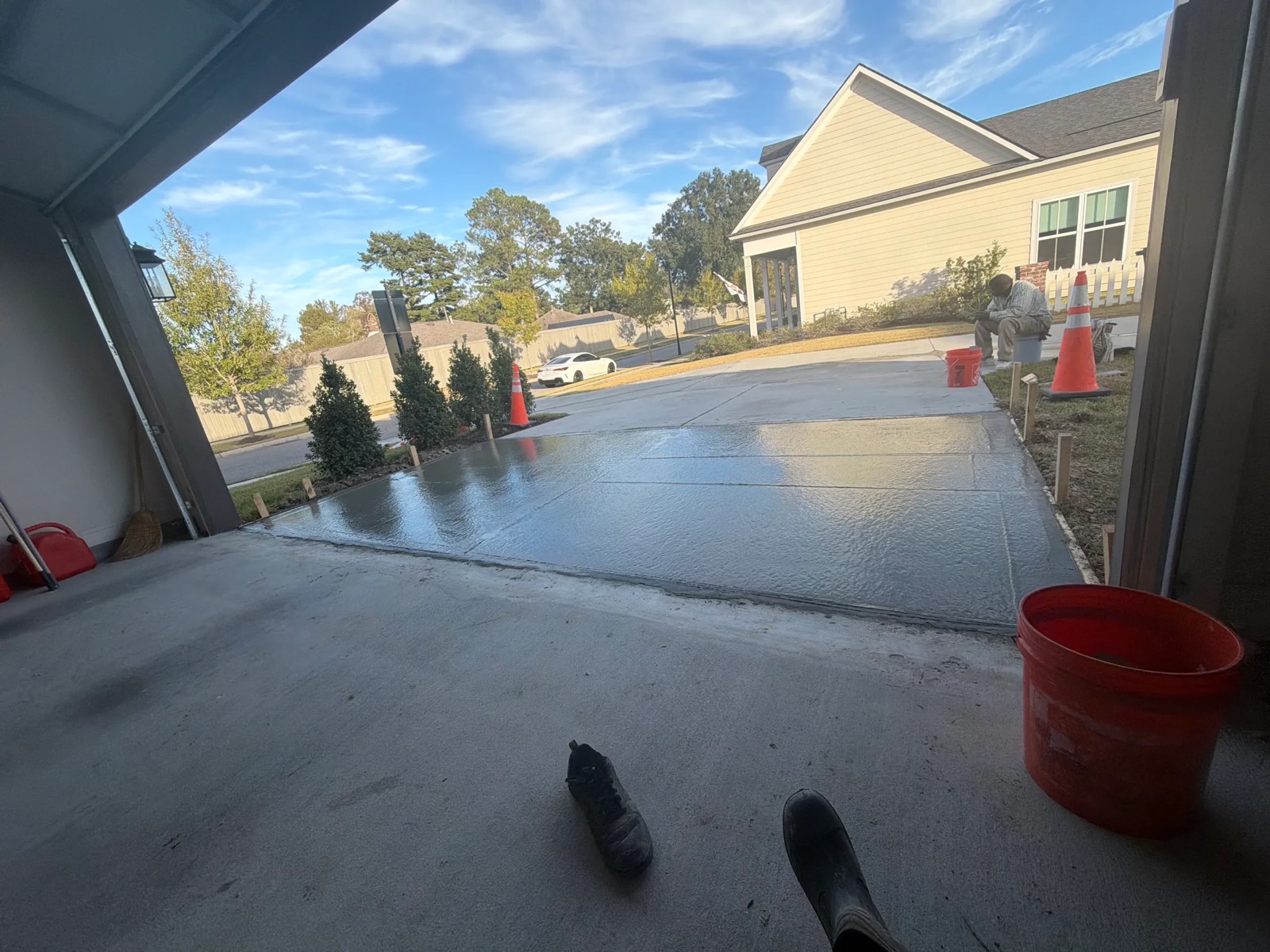
The client photos show a damaged driveway area broken out, a replacement section being poured, and the repaired concrete after placement in the Village of St. George. The images document a localized replacement; they do not provide the cause of the original damage, dimensions, mix strength, reinforcement, or repair date.
Village of St. George, LA Neighborhood-level location
A damaged driveway section can interrupt a smooth path from the street to a garage or parking area. This client-documented project in the Village of St. George shows three stages: the existing section after it was broken out, concrete placement, and the new surface.
The before-and-after sequence helps explain what a localized driveway repair can look like. It does not establish why the concrete failed or prove that every driveway problem can be fixed by replacing one section. The right repair depends on the condition of surrounding concrete and the support below it.
What the before-and-after photos document
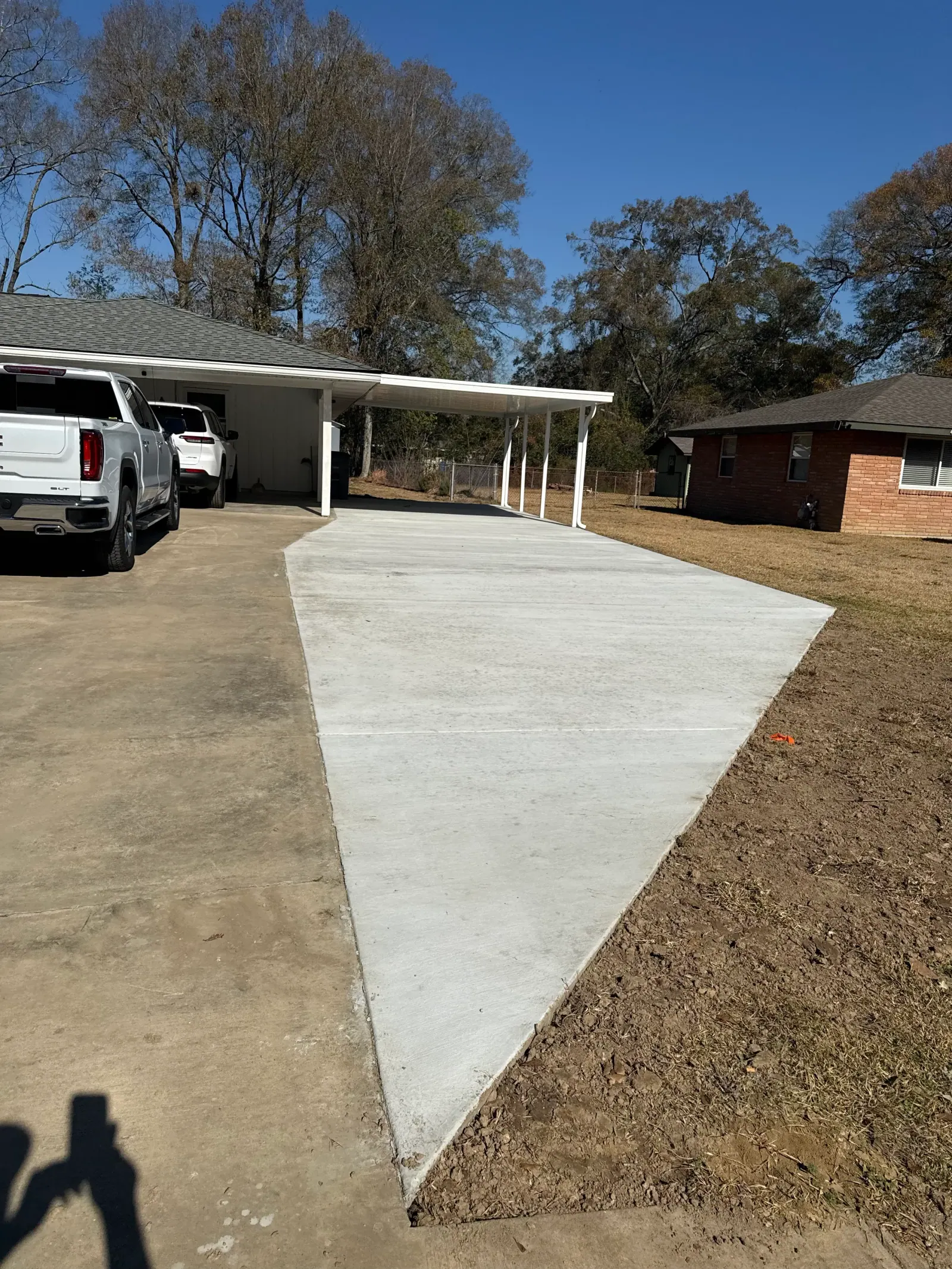
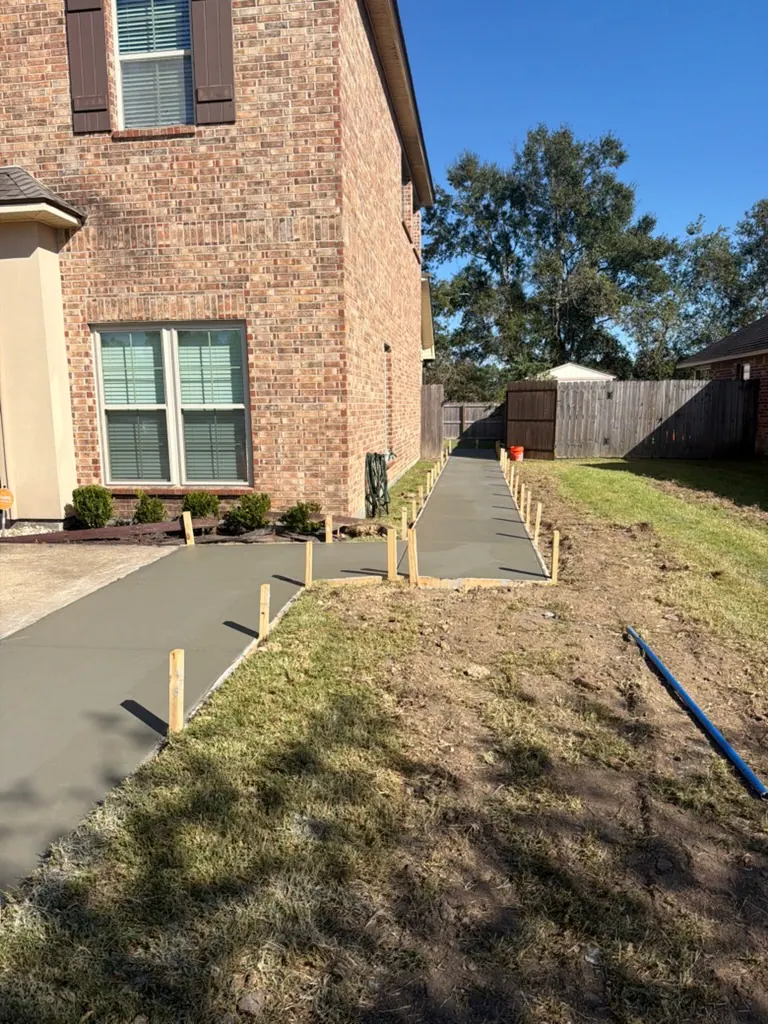
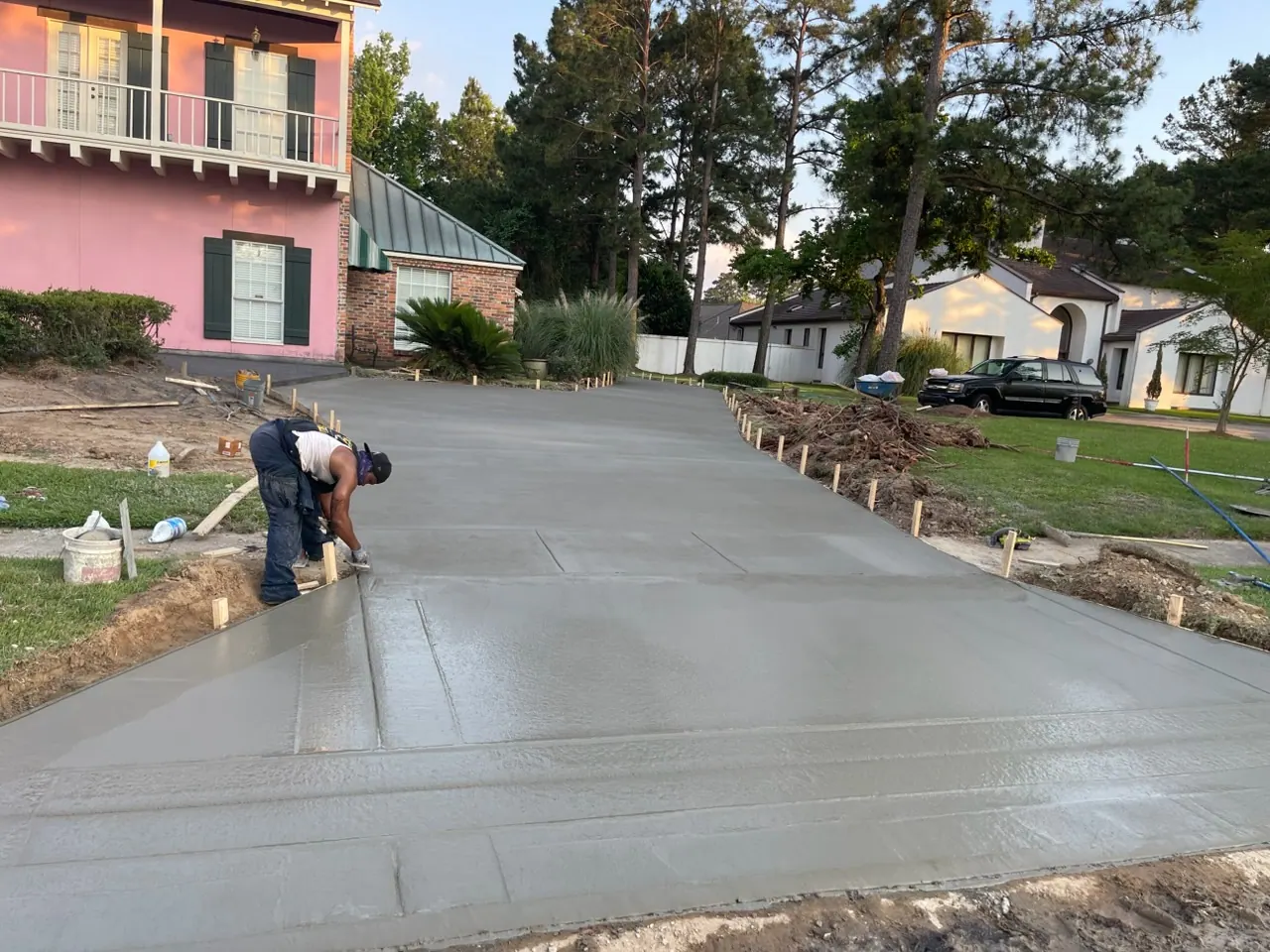
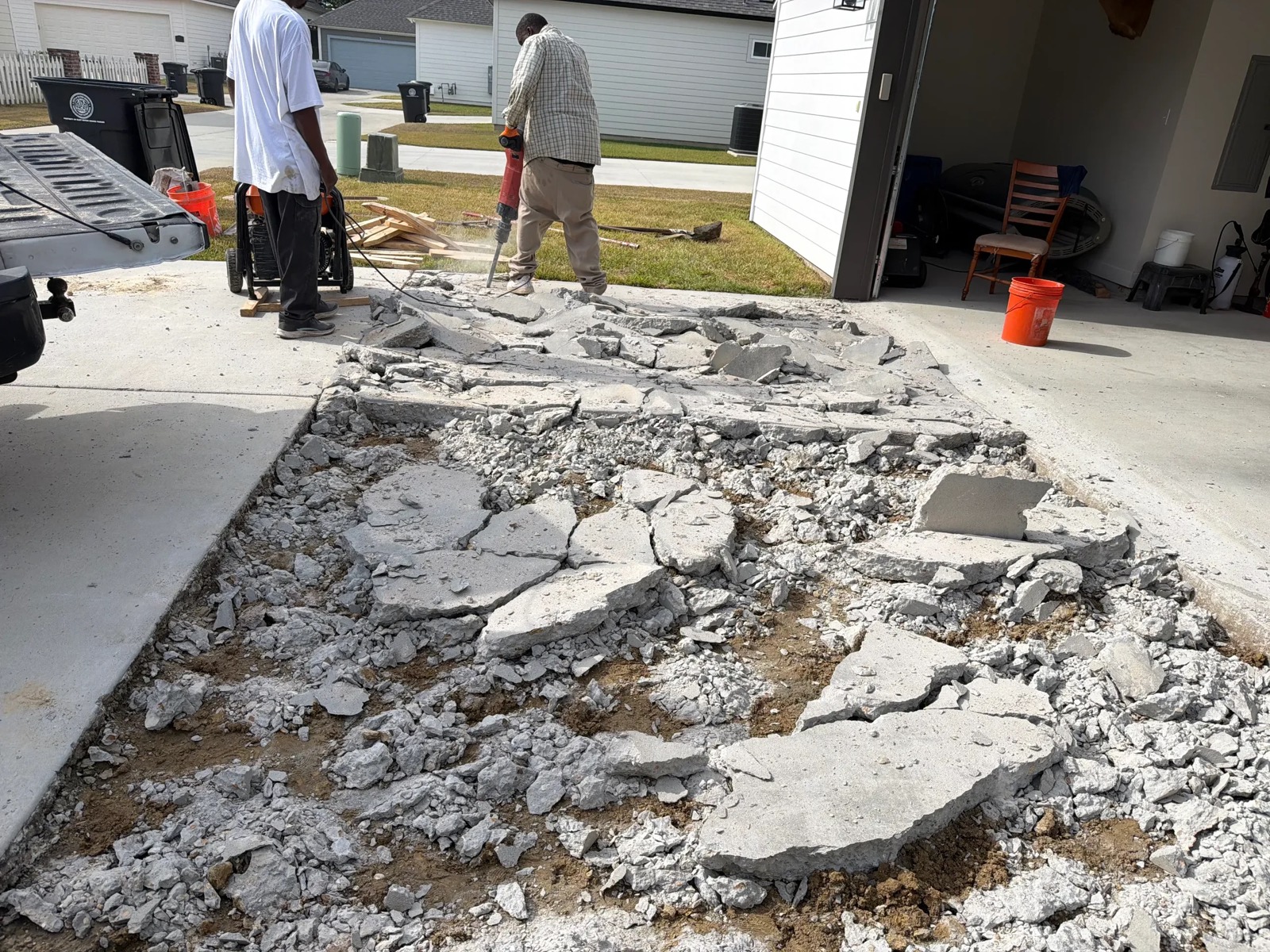
The first image shows broken concrete and a cleared section beside the remaining driveway. The during-work photo shows a ready-mix truck and workers placing concrete into a formed area. The final photo shows a newly finished section meeting the older driveway surface.
This sequence makes the scope easier to understand: the damaged portion was removed and a replacement area was poured. The exact demolition boundary, excavation depth, base material, reinforcement, concrete strength, and joint layout are not stated in the project brief.
A sound repair plan also considers how the replacement meets the surrounding slab. If nearby concrete is unstable or the underlying cause remains, a new surface may not address the larger issue. A contractor should inspect the edges and support conditions before recommending a localized repair.
- Look for cracks, settlement, crumbling edges, and changes in slab height.
- Check whether water collects around the damaged area or flows toward the home.
- Ask whether the surrounding concrete is stable enough for a section replacement.
- Clarify how the repair will meet existing concrete and where joints will be placed.
Section replacement compared with a full driveway replacement
These are general decision points, not a diagnosis of this property. A photo cannot show what lies beneath the concrete. The contractor’s site review should guide whether a small repair, broader replacement, or another approach fits the problem.
| Option | May be considered when | Question to ask |
|---|---|---|
| Localized section repair | Damage appears limited and nearby concrete is sound | Is the remaining slab stable, and what caused this section to fail? |
| Larger-area replacement | Damage is widespread or several areas are failing | How much concrete needs removal to reach stable edges and support? |
| Further evaluation | Settlement, drainage, or recurring cracks may point to a broader issue | Should site conditions be reviewed before choosing the repair scope? |
Why removal, support, and joints matter
Concrete performance depends on more than the surface finish. The condition and compaction of the supporting ground, water management, concrete placement, curing, and jointing all affect the finished work. The American Concrete Institute’s guidance on slabs discusses workmanship and joint construction as parts of concrete construction quality.
Joints create planned locations for movement and help control where shrinkage cracking occurs. They do not eliminate all cracking. Ask what joint layout suits the repair and how it will relate to the surrounding driveway. Also ask when the area can be walked on or driven over; timing depends on the mix and site conditions.
For this Village of St. George project, the client supplied the location and the photo sequence. No project specifications, price, or completion date were included, so none are inferred here.
Documented condition
A client photo records the damaged area after the broken concrete was removed.
Replacement in progress
The work photo shows concrete delivery and placement at the formed repair area.
Finished section
The final image shows fresh concrete where the removed driveway area had been.
Ask what caused the damage
Before choosing a repair size, ask the contractor to assess the concrete around the damaged section and the visible site conditions.
Project record
The map pin marks the Village of St. George area, not the customer's property. No exact address or technical specification was provided.
Explore related services and project maps
Browse the service page for more details and the map of projects assigned to that service.
Sources & References
Frequently Asked Questions
QCan one damaged part of a driveway be replaced by itself?
Sometimes. It depends on whether the damage is limited and whether the surrounding concrete and support are stable. A site inspection helps determine the scope.
QDoes replacing a section stop all future cracking?
No. Jointing can help manage where cracks form, but concrete can still crack due to movement, shrinkage, loading, and site conditions.
QHow long before a repaired driveway can be used?
The appropriate waiting time depends on the concrete mix, weather, placement, and intended use. Follow the contractor’s project-specific instructions.
Planning a driveway or concrete repair?
Share your project location, intended use, and approximate size to discuss scope and estimate availability.